Thursday, February 17, 2011

Menstrual Cycle Animation


Click here for an animation about the menstrual cycle.

Click here or a second animation about the menstrual cycle. This one is more advanced, but helpful.

Wednesday, February 16, 2011

Female Reproductive System

Click here to access a website about the female reproductive system. On the website, click on the diagram of the female reproductive system, and then if you click on each of the organs a bubble will appear with information about the organ.

1. What are the main female hormones?
2. What hormones stimulate the gonads to produce their hormones?

Male Reproductive System

Click here to access a website with information on the male reproductive system.
On the website you will find links to articles with useful information on human general health. Which articles and pieces of information did you find more interesting?

1. Where does meiosis occur in males?
2. What is the product of meiosis in males?
3. What is the main hormone produced by the testicles?
4. What is the function of this male hormone?
5. Can you identify and describe the function of three organs of the male reproductive system?

Tuesday, February 15, 2011

Spermatogenesis and Oogenesis


Click here to view an animation about spermatogenesis. Take the quiz at the end. How did you do?

Click here to view an animation about oogenesis.

Tuesday, February 8, 2011

Wednesday, February 2, 2011

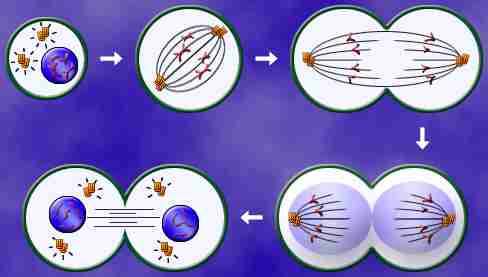
Mitosis Animations


Click here for a narrated animation of mitosis. Take the quiz when you are finished. How did you do? Do you want to view the animations we watched during class? Click here to view the animation by CELLS alive and here to view the second animation.

Enjoy!

Thursday, January 27, 2011

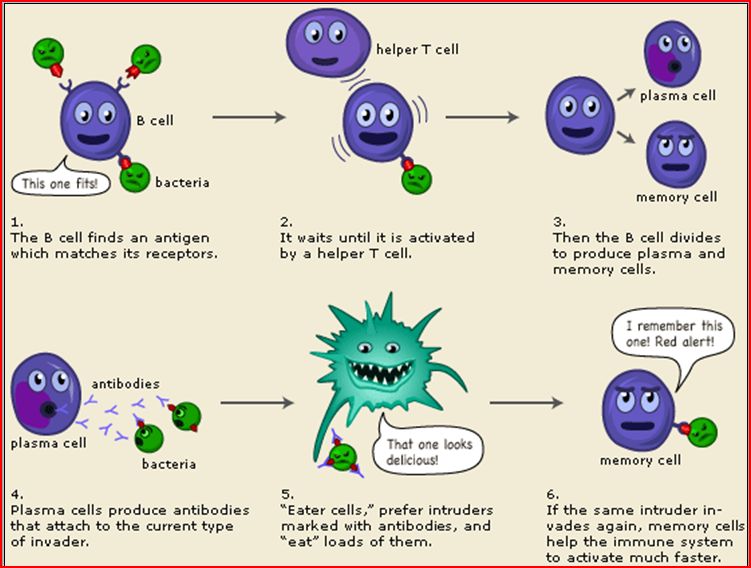
How is an antigen involved in the immune response?

Click here for a short animation of how antigens stimulate antibody production. There are several other immune system animations on the right side of the page! Enjoy:)

Did you watch any of the other animations? If so, which ones were the most helpful or relevant?

Wednesday, January 26, 2011

Vaccines


Vaccines are used to expose the immune system to harmful antigens and teach the body how to fight back. Vaccines contain a form of dead or weakened pathogens. This causes our body to release antibodies in response to this type of pathogen.

After fighting off the vaccine, the body retains a lasting memory of how to fight off that particular type of attack. Watch this animation to
learn more.

What diseases have you been vaccinated against?

Tuesday, January 25, 2011

Allergies


Allergies are part of your body's non-specific immune system. Watch this animation to learn more.

What types of allergies do you suffer from?

Monday, January 24, 2011

Antibody Animation

This 3D medical animation shows how antibodies stop harmful pathogens from attaching themselves to healthy cells in the blood stream. The animation begins by showing normal red and white blood cells flowing through the blood stream. A single pathogen appears onscreen slowly moving toward its destination on the surface of a cell. The tubular extensions on the pathogen are surface proteins which attach to the surface of a white blood cell. As the animation continues, more pathogens continue to attach to the white blood cell, rendering it ineffective.

During the immune system response, Y-shaped antibodies begin attacking the pathogen. The antibodies completely block the pathogen from attaching to the white blood cell, "tagging" the pathogen so that one of the immune system's leaner and meaner cells, a macrophage, appears onscreen to engulf and digest the pathogen.

Wednesday, January 12, 2011

Wednesday, January 5, 2011

At the GAP - the synapse, that is!


Click here for a detailed animation of how the nervous system processes information. Be patient, the animation moves rather slowly, but there is a great deal of useful information about how messages are carried throughout the body, specifically through nerve cells.

How does diffusion play a part in the transmission of nerve impulses?

Friday, December 24, 2010

Help fund my Donors Choose Project ! Only $98 to go!

UPDATE #2: MY PROJECT IS FULLY FUNDED! MANY THANKS TO MY DONORS AND ALMOST HOME/AMERICAN EXPRESS. I CAN'T WAIT TO USE THE LIFE SIZED MODEL IN CLASS:)

UPDATE #1: ONLY $78 TO GO (THANKS TO MY FIRST OFFICIAL DONOR)!

Please help fund my project, Unsolved Mysteries of the Human Body Systems, on DonorsChoose.org. I am requesting funding for a life sized model of the human torso. This is a hands on tool that will make learning about the human body much more interesting and exciting.

My project is eligible for funding by Almost Home and American Express. This means that $370.91 will be funded by partners of Donors Choose. The remaining $98 must be contributed by citizen philanthropists (that's you, your family, your neighbors, etc). Students - please tell your parents. Parents - please tell your friends and family. Every dollar counts!

If my project does not reach funding ($98) by the time the Almost Home grant runs out or expires, the cost of the project will revert back to its original price ($468.91). This offer is only available for a limited time, so act now if you are interested in making a donation.

Remember, only $98 to go!

Fingers crossed. Wish me luck:)

Thank you on behalf of my students and myself.

Thursday, December 23, 2010

Osmosis in Red Onion Cells

Osmosis in Red Onion Cells from Leslie S on Vimeo.


Watch the 20s video clip of osmosis occurring in red onion cells. Look familiar? What solutions were added to the wet mount? In what order?

Wednesday, December 22, 2010

CellCraft: Exploring the Cell Through Gaming

CellCraft is a realistic cellular simulation that challenges players to learn about and manipulate a cell and its various components in order to survive. Have fun!

Special thanks to Andrew Glasser:)

Thursday, December 16, 2010

Circulatory System

Circulatory System and Gas Exchange from Leslie S on Vimeo.


Click here to view a helpful website about circulation.

Click here to read about the blood that fills our arteries, veins, and capillaries. Click on the topics on the right to learn more about each type of blood cell.

Finally, click here to learn about disorders of the circulatory system.

Wednesday, December 15, 2010

Respiratory System Q & A

1)Why do we breathe?
Your body produces energy through a chemical reaction that requires oxygen. This energy allows us to move around, and also keeps our hearts beating, our digestive systems moving, and our organs functioning! Humans can’t store oxygen in our bodies, so we need to get it from the environment. The easiest way to do this is to breathe in oxygen from the atmosphere!

First, air travels through the nose or mouth when you breathe in. It then moves down the trachea to your lungs, where it fills tiny sacs called alveoli. These are surrounded by tiny blood vessels called capillaries. Oxygen from the air seeps through the alveoli and into the capillaries. Red blood cells inside the capillaries transport the oxygen throughout your body, delivering it to all the cells that need it. A separate set of capillaries surrounding the alveoli pass carbon dioxide (a poisonous waste gas created by your cells) from your blood to the alveoli. The carbon dioxide is then expelled from your body when you breathe out.


2) How can oxygen pass from the alveoli to the capillaries?
Oxygen moves through the body by diffusion. That’s a form of passive transport, which means that oxygen flows through the membranes of cells without any energy being expended. Diffusion occurs is when molecules move from areas of high concentration, where there are lots of them, to areas of low concentration, where there are fewer. Because there is more oxygen outside the alveoli and capillaries than inside them, oxygen passes into them by diffusion. Once oxygen enters the capillaries, it is transported through the body by blood vessels.

3)How does pollution affect our lungs?
Pollution is the contamination of the environment as a result of human activities. Air pollution is largely caused by the burning of wastes and fuels. Air pollution can contribute to health conditions like asthma, bronchitis, emphysema, lung disease, heart disease, and respiratory allergies. Another thing that can trigger breathing problems is smoke from cigarettes. Smoking and exposure to secondhand smoke can cause or contribute to the development of lung cancer, cardiovascular disease, bronchitis, and asthma.

4)Why does your breathing rate increase during and after exercise?
When you exercise, your arms and legs and the rest of your body needs more oxygen to function. Your heart beats more quickly to send oxygen to the rest of your body. Your heart, in turn, requires more oxygen from your lungs, and so you begin to breathe more quickly. When you stop exercising, your breathing rate returns to normal, but it can remain high for a time after you stop.

Tuesday, December 14, 2010

Respiratory System Video

Respiratory System Video from Leslie S on Vimeo.


Click here
to view a second video about gas exchange from Discovery Health.

How does gas exchange occur?
Why does our body need oxygen?
Why does our body produce carbon dioxide?

Thursday, December 9, 2010

One more digestive system video

Click here to watch a short video about the digestive system. This video is super cute!

Also, watch the video, "Banana and Candy." The voice of the banana is Rena's mom.

All of the videos on the website have helpful information about healthy nutrition. Enjoy!